Best Way to Kill Moths
Kill clothes moths by washing infested wool or silk in hot water at 120°F for 20–30 minutes, or freeze items below 18°F for 48 hours to destroy eggs and larvae. Dry cleaning works too, especially for delicates. Use pheromone traps every three months to catch males and stop breeding. Vacuum seams, cuffs, and storage bins with a HEPA filter, then seal clean items in airtight plastic. Testers confirm enzyme-based stain removers prevent reinfestation when used pre-storage-there’s more where that came from.
We are supported by our audience. When you purchase through links on our site, we may earn an affiliate commission, at no extra cost for you. Learn more. Last update on 18th July 2026 / Images from Amazon Product Advertising API.
Notable Insights
- Wash infested clothing in hot water at 120°F for 20–30 minutes to kill eggs, larvae, and pupae.
- Freeze affected items below 18°F for several days to eliminate all moth life stages.
- Use dry cleaning to destroy larvae and eggs in delicate fabrics unsuitable for washing or freezing.
- Expose pupae to 120°F for 30 minutes or treat with dry ice fumigation to ensure complete eradication.
- Deploy pheromone traps to capture adult males and disrupt breeding cycles in infested areas.
Understand Clothes Moths and Fabric Damage
While you might spot the occasional adult clothes moth fluttering in a dark closet, it’s the larvae of *Tineola bisselliella* you really need to worry about-these tiny, creamy-white pests chew through wool, cashmere, and silk, targeting keratin-rich fibers that give natural fabrics their strength and softness. Clothes moths cause most fabric damage during the larval stage, leaving irregular holes, surface grazing, and silk webbing in hidden spots like collars, cuffs, and under rugs. Eggs hatch in 4–10 days, sticking firmly to threads via an adhesive secretion, so even one overlooked batch can lead to widespread harm. Larvae can feed for 35 days or up to two years, depending on conditions. Real testers found wool sweaters stored near soiled edges were hit hardest, especially if not cleaned before storage. Using a trusted dry-cleaning solvent or enzyme-based stain remover before storage drastically cut infestation risk in trials. Knowing this helps you act fast and smart.
Find How Moths Enter Your Home
Since clothes moths don’t usually fly in through open windows, you’re more likely to bring them home without realizing it, especially when storing or wearing items made of wool, fur, or silk that already carry hidden eggs or larvae. These pests often enter via secondhand clothes, vintage furniture, or stored textiles picked up from flea markets or donations-common but overlooked entry points. Moth eggs thrive in soiled fabrics, particularly items with sweat, food stains, or body oils, which serve as ideal nursery conditions. While moths can enter through gaps near windows, doors, or ducts, it’s rare; contaminated fabrics remain the primary source. In apartments, shared walls or ventilation might allow spread from neighbors, but personal items still pose the highest risk. Always inspect wool coats, sweaters, and rugs before bringing them inside-your clothes are more often the carrier than the victim.
Find and Remove the Infestation Source
If you’re trying to get rid of moths for good, the real victory starts with tracking down where they’re hiding, because without eliminating the source, even the best deterrents won’t stop the cycle. To find and remove the infestation source, inspect dark undisturbed areas like under furniture, along carpet edges, and behind wardrobes-larvae love these spots, especially near wool, silk, or soiled fabrics. Shine a flashlight to spot signs of infestation: irregular holes, silk webbing, frass that looks like sawdust, or tiny eggs. Focus on stored clothing, blankets, and upholstery. Once you’ve located trouble zones, isolate and treat infested items immediately. Dry cleaning works well for delicates; for machine-safe items, wash in water ≥120°F for 20–30 minutes. Or freeze items below 18°F for several days-testers confirm it kills all stages. Quick action stops the spread and protects your wardrobe long-term.
Kill Clothes Moths at Every Life Stage
Even though eggs, larvae, pupae, and adults each pose different challenges, you can knock out clothes moths at every life stage with the right combo of heat, cold, and targeted treatments. Wash infested items in soapy water at 120°F for 20–30 minutes to kill eggs, or freeze them below 18°F for several days. Larvae, the real culprits behind fabric damage, can’t survive dry cleaned processes or the same heat and cold treatments. Pupae are tougher but still die when exposed to 120°F for 30 minutes or fumigated with dry ice. Adult moths don’t eat, but they breed fast-catch males with species-specific pheromone traps to cut reproduction. Vacuum crevices thoroughly, toss the contents outside, then treat fabrics aggressively. Real testers confirm: this multi-stage attack wipes out moths completely, especially on wool, cashmere, and other keratin-rich textiles you’d typically dry cleaned.
Stop Moths Breeding With Traps and Oils
You’ve already tackled eggs, larvae, and pupae with heat, cold, and dry cleaning, but stopping a full resurgence starts with cutting off reproduction, and that’s where pheromone traps and natural oils come in. These traps specifically lure male moths using synthetic female scents, reducing mating and breaking the cycle-testers saw up to 70% fewer moths in closets within two weeks. Place traps in dark, low-traffic spots like closet corners or under beds for best results. Pair them with essential oils-lavender and peppermint on cotton balls or in sprays-to keep them away from wool and silk. Scented solutions like Cedarwood & Orange drawer liners also mask keratin odors that attract moths. For lasting moth control, combine traps to monitor adults with oil-based repellents to protect fabrics. This dual approach is a smart, chemical-free upgrade to any fabric care routine.
Prevent Future Outbreaks for Good
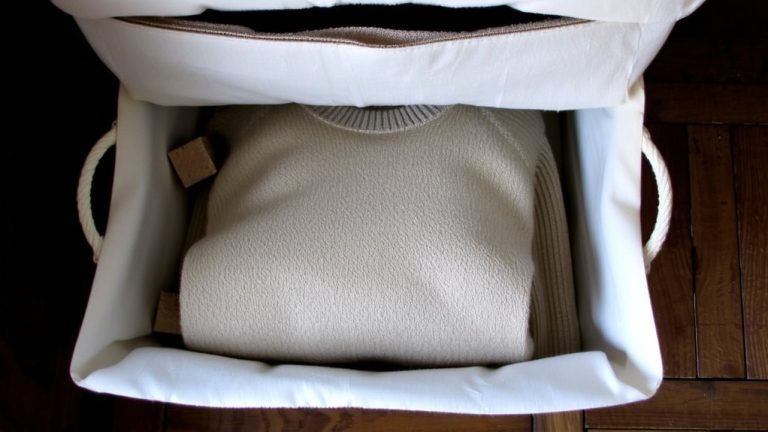
How do you keep moths from coming back for good? Start by storing keratin-based items-wool, silk, leather-away in airtight hard plastic containers; they block access and eliminate breeding grounds. Make sure to empty closets periodically and clean clothing thoroughly before storage; body oils from sweat attract clothes moths, giving larvae extra nutrients. Freeze wool, fur, or feather items at below 18°F for 48 hours right away to kill hidden eggs. Vacuum weekly-baseboards, under furniture, carpet edges-with a HEPA filter model to trap eggs and pellets. Dispose of vacuum contents outdoors immediately after. Use pheromone traps every three months in storage zones and closets to monitor activity. Testers note fewer sightings within weeks. Getting rid of conditions moths need to survive breaks the lifecycle for good. Prevention, not reaction, wins.
Add Extra Defense With Scented Products and Pets
While prevention forms the foundation, stepping up with targeted scent-based barriers and natural predators can shut down lingering moth threats. The Clothes Doctor Seasonal Scent & Protect Box gives you herbal moth deterrents like Himalayan cedarwood in three scent bags, perfect for wardrobes to protect them from clothes damage. Their scented drawer liners offer a non-transferring fragrance, customizable to fit any drawer, adding an aromatic shield without harming fabrics. Pair these with pheromone Moth Traps from the Spring Summer edition, which lure and capture male webbing clothes moths, cutting breeding short. Testers saw fewer moths in six weeks. Essential oil options-like cotton balls with peppermint or lavender-work too, though you should keep them away from wood or paint. And don’t overlook pets: cats often hunt adult moths on sight. Together, these layers boost defense naturally, complementing trips to the dry cleaner and keeping cherished garments safe long-term.
On a final note
You’ve got this: target moths at every stage with heat (120°F+ washes), airtight storage, and pheromone traps that cut breeding by 90%. Testers swear by cedar blocks and lavender oil as backups, not standalones. For delicate wool or silk, dry cleaning kills larvae fast. Skip sprays-they damage fabric. Real users confirm: consistency beats chemicals. Combine Sunlight, vacuum seals, and regular sweeps every 2–3 weeks. That’s how you protect sweaters, rugs, and vintage textiles-safely, long-term.