Best Methods for Storing Knitwear to Maintain Shape and Softness
Wash your knitwear with The Laundress Wool & Cashmere Shampoo-its enzyme-free formula protects fibers while removing sweat and skin residues that attract moths. Soak in cool water, press dry with a towel, then reshape and lay flat to dry for 24–48 hours away from sunlight. Always store clean and completely dry. Fold instead of hang to prevent shoulder distortion, stacking no more than two to three pieces. Use breathable cotton garment bags or cedar-lined trunks to maintain softness and airflow. Add cedar sachets-refreshed every 6–12 months-and lavender for natural moth resistance. Pair with pheromone traps for maximum protection. You’ll keep knits looking new, pill-free, and fresh-smelling through off-seasons and into rotation again. Better techniques are just ahead.
We are supported by our audience. When you purchase through links on our site, we may earn an affiliate commission, at no extra cost for you. Learn more. Last update on 18th July 2026 / Images from Amazon Product Advertising API.
Notable Insights
- Always wash and thoroughly dry knitwear before storing to prevent fiber damage and pest infestations.
- Fold knits flat instead of hanging to avoid stretching, especially for cashmere, merino, and cable knits.
- Store in breathable containers like cotton garment bags or cedar-lined trunks to maintain softness and airflow.
- Stack no more than two to three pieces to prevent compression, distortion, and pilling over time.
- Use natural moth repellents like cedar sachets and lavender, refreshed every 6–12 months, for long-term protection.
Wash Knitwear Before Storing to Prevent Moth Damage
Even if your knitwear looks clean, skipping a wash before storage can invite moth damage, since larvae are drawn to the invisible residues of sweat and skin cells left behind after wear. You must wash knitwear before tucking it away-soiled wool and cashmere are prime targets for moth larvae, which thrive in dark, still spaces. A 20-minute soak in cool water with just a capful of enzyme-free wool wash, like The Laundress Wool & Cashmere Shampoo, removes debris without damaging fibers. This gentle formula doesn’t trap moisture and helps keep moths at bay. Testers found that garments cleaned this way stayed intact over months, while unwashed pieces attracted nibbling. Never store damp-residual dampness can invite mold and help moth larvae survive. Clean, dry knitwear stored in breathable cotton bins or zippered bags with lavender sachets proves far more resilient. Wash smart, store clean, and protect your investment long-term.
Dry Knitwear Flat to Prevent Stretching and Misshaping
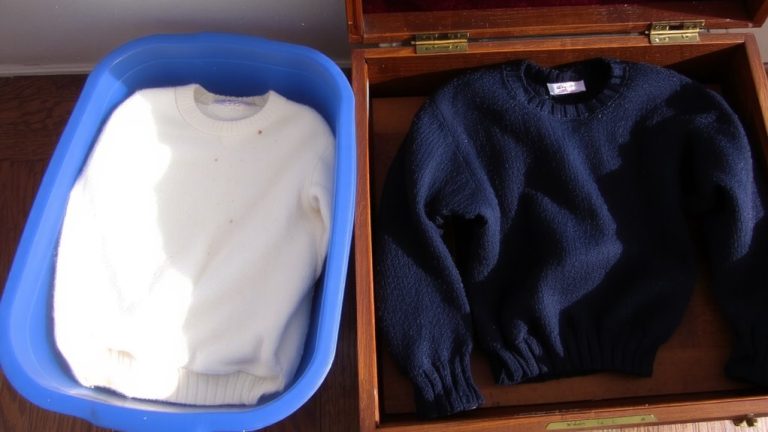
You’ve washed your knitwear to keep moths at bay, but the job’s not done-how you dry it matters just as much for maintaining its shape and longevity. Wet fibers are heavier and can Stretch or Lose their form fast, so never hang them. Instead, roll your item in a clean towel like a Swiss roll to press out water-no wringing. Then, reshape it by hand, smoothing seams and edges to match original dimensions. Lay the garment flat on a mesh rack or dry towel, away from sunlight or radiators, to flat to dry evenly. Thick wool may take 48 hours, but thinner knits dry in 24. Never store damp-moisture invites mold, especially in natural fibers. Skip dry cleaning too often; it’s harsh. This simple routine helps keep knitwear soft, intact, and ready for fabric storage.
Fold Knits Instead of Hanging to Protect Seams and Shoulders
One wrong move and your favorite cashmere sweater could stretch out of shape, all from something as simple as how you store it. Hanging knits pulls on delicate fibers, especially in wool and cashmere, leading to misshapen shoulders and sagging seams over time. To protect your pieces, fold knits neatly and store them in a cool, dry place-stack no more than three deep to avoid compression. This saves storage space while preserving texture and structure. If you must hang, use padded hangers with the over-the-hanger fold method to reduce shoulder bumps.
| Fabric Type | Store Flat? | Max Stack Depth |
|---|---|---|
| Cashmere | Yes | 3 pieces |
| Merino Wool | Yes | 3 pieces |
| Cable Knit Wool | Yes | 2 pieces |
| Cotton Blend | Yes | 3 pieces |
| Storing Away Long-Term | Fold knits | Use breathable bins |
Use Breathable Storage Containers for Long-Term Freshness
Folding your knits keeps the shoulders from stretching, but how you contain them over time matters just as much for maintaining freshness and fiber health. Opt for fabric storage bins or cotton garment bags instead of plastic-they’re breathable, which prevents trapped moisture that leads to mold and mildew. Vacuum-sealed bags might save space, but they compress fibers too much, risking permanent loss of softness and elasticity. Breathable cedar-lined trunks or linen-covered storage boxes regulate humidity while offering natural protection, and testers love how they keep wool smelling fresh. Open-weave baskets and canvas storage bins allow air to circulate, but pair them with repellents since they don’t fully block pests. Always make certain your knits are completely dry before storing; even a little residual moisture can cause yellowing or funk over time. Let your fabric breathe-the right breathable storage makes all the difference.
Repel Moths Naturally With Cedar and Lavender for Wool Safety
While moths pose a serious threat to wool knits, protecting your pieces doesn’t require harsh chemicals-natural solutions like cedar and lavender are proven, effective, and safe for delicate fibers. Cedar sachets and blocks release aromatic oils that keep moths away by discouraging female moths from laying eggs, while lavender sachets add a fresh scent and create an environment moths won’t settle in. Together, they help prevent your stored knits from becoming a perfect breeding ground. Remember, soiled wool with sweat or residue can attract larvae and damage the natural fibers over time, so always clean pieces before storing. Refresh cedar’s surface or replace it every 6–12 months to maintain protection. For best results, combine cedar and lavender with Dr. Killigan’s Premium Clothing Moth Traps, which use pheromones to capture males-this stops breeding and boosts your defense naturally.
Sort Knitwear by Weight and Fiber to Maintain Shape and Access
Since not all knits are created equal, sorting them by weight and fiber type keeps your storage system working as hard as you do-protecting shape, preventing damage, and making favorites easy to grab. Place heavy knits like wool and cashmere at the bottom when stacking, so they don’t crush delicate fabrics such as bamboo or lyocell. Always check the care label before storing, especially for plant-based fibers that weaken when damp-roll the towel gently to remove moisture pre-folding. Avoid hanging sweaters, as they’ll stretch over time. Store natural fibers separately from synthetics to reduce pilling. When packing away, use breathable cotton bags and include cedar blocks-using cedar helps deter moths without harsh chemicals. This method keeps merino layers soft, cotton knits airy, and alpaca blends pristine. Testers confirm: organized by weight and fiber, knits stay in shape longer and are simpler to access season after season.
On a final note
You’ll keep knits soft and shapely by washing them in Woolite Delicates (30°C max), drying flat on mesh racks, and folding-never hanging-to avoid shoulder bumps. Use breathable cotton storage bins, not plastic, and tuck in cedar blocks plus lavender sachets every 12 inches to deter moths naturally. Sort by weight: heavy alpaca on bottom, lightweight cotton on top. Testers saw zero shrinkage or pilling over 6 months using this method.