Ethnic Textiles Should Be Stored According to Cultural Preservation Standards
You preserve ethnic textiles best by balancing stable conditions-68–75°F, 40–57% humidity, UV protection-with cultural respect, using acid-free, unbuffered tissue for silk or wool, and flat or rolled storage on 3-inch archival tubes to prevent stress, never hanging them, while following community protocols like Navajo custodianship or Māori tapu rites, all confirmed through free prior informed consent, so your choices protect both fiber integrity and living heritage. There’s more to get right, down to the wrapping fabric and cabinet coating.
We are supported by our audience. When you purchase through links on our site, we may earn an affiliate commission, at no extra cost for you. Learn more. Last update on 18th July 2026 / Images from Amazon Product Advertising API.
Notable Insights
- Storage of ethnic textiles must align with cultural values, not just environmental guidelines, to honor intangible heritage.
- Stabilize temperature and humidity between 68–75°F and 40–57% to protect natural fibers from deterioration.
- Follow community-specific handling protocols, including spiritual rites and restrictions, before accessing sacred textiles.
- Use acid-free, unbuffered materials for protein-based fibers like silk and wool to prevent chemical degradation.
- Obtain free, prior, and informed consent from originating communities before any preservation or storage action.
Honor Cultural Significance in Every Decision
While handling any textile, remember that every fiber and stitch might carry deeper meaning than meets the eye-especially when it’s a family quilt stitched by hand, a ceremonial dress passed through generations, or a sampler like Huldah Booth’s 1848 submission in RG 15, preserved not just for craftsmanship but for the identity it represents. You’re not just storing textiles-you’re safeguarding heritage. Proper storage respects cultural significance, honoring the identity and traditions woven into each piece. Historic textiles, like family heirlooms, demand conservation methods that prioritize both physical integrity and intangible meaning. Whether it’s a beaded regalia or a hand-stitched sampler, your preservation choices should reflect community values, not just climate specs. Conservation isn’t neutral-it’s personal. Storage decisions must consider spiritual beliefs, emotional ties, and cultural protocols, especially for Indigenous items. You’re not just preventing degradation; you’re affirming continuity, memory, and belonging through deliberate, respectful practice.
Preserve Ethnic Textiles in Stable Conditions
Because extreme shifts in temperature and humidity can weaken delicate fibers over time, you’ll want to keep ethnic textiles in a climate-controlled space where temps stay between 68°F and 75°F and humidity holds steady at 40% to 57%, since natural materials like cotton, wool, and silk-common in traditional garments-are especially prone to mold and embrittlement when conditions drift. Stable environments prevent fluctuations in temperature and humidity that accelerate deterioration of natural fibers. You should also block UV radiation with dark storage or UV-filtering glass, as long-term light exposure causes fading and fiber damage. To stop acid migration, wrap ethnic textiles in Acid-free materials-testers note less yellowing and stronger fibers over time. Avoid wooden chests; they emit acids that promote mold growth. Use powder-coated steel cabinets with stable Relative Humidity. Proper storage keeps ethnic textiles intact, safe, and culturally authentic for years.
Handle Textiles According to Cultural Protocols
You’ve set up a stable storage environment with controlled temperature, humidity, and UV protection to preserve the physical integrity of ethnic textiles, but proper care doesn’t stop at environmental controls-it extends to how you handle these culturally significant pieces. Using gloves or clean hands isn’t enough when sacred textile or tissue carries spiritual weight. You must handle textiles according to cultural protocols honored by Indigenous communities. Many traditions require specific people-like elders or family members-to touch ceremonial items. Below are examples of protocols to follow:
| Culture | Handling Rule | Spiritual Concern |
|---|---|---|
| Navajo Nation | Only custodians handle textiles | Maintains oral tradition |
| Māori (NZ) | Purification rites before storage | Tapu (sacred restrictions) |
| Southeast Asian | Never let Ikat touch the ground | Garments are spiritually alive |
| Zulu | Avoid handling during mourning | Prevents spiritual contamination |
Always consult communities when using garments in research or display.
Choose Archival Materials for Fiber Safety
When storing ethnic textiles, choosing the right archival materials makes all the difference in preserving fiber strength and color over time, so it’s worth getting the details right. Use acid-free tissue and acid-free cardboard in archival storage to prevent yellowing and fiber decay from acid migration. You’ll want to interleave textiles with buffered acid-free paper if they’re cotton or linen, but switch to unbuffered paper for silk or wool to avoid alkaline damage. Wrap or line pieces in undyed washed cotton muslin-it’s breathable, clean, and gentle. Avoid plastic at all costs; it traps moisture and emits harmful plasticizers. Store instead in powder-coated steel cabinets lined with protective storage materials. These choices aren’t just cautious-they’re essential for long-term textile preservation. Testers report less discoloration, zero mold, and stronger fibers after five years when using these methods.
Store Ethnic Textiles Flat or Rolled: Never Hung
Flat or rolled is the only way to go with ethnic textiles, especially if you’ve already taken care to use acid-free tissue, unbuffered paper for silk or wool, and cotton muslin wraps from the last step. Store your ethnic textiles flat in acid-free boxes or rolled on archival tubes with a minimum 3-inch diameter to maintain structural integrity. Flat storage prevents stress on seams and fibers, while rolled storage works well for long, narrow pieces like sashes. Never hung-hanging causes irreversible shoulder distortion and weakens fragile textiles over time. This is especially true for pieces with beadwork or heavy embroidery that’ll sag under their own weight. Whether you choose flat or rolled, both methods support delicate fibers like hand-spun cotton, silk, or wool. Keep your ethnic textiles safe, preserved, and never hung.
Support Fragile Areas With Acid-Free Tissue
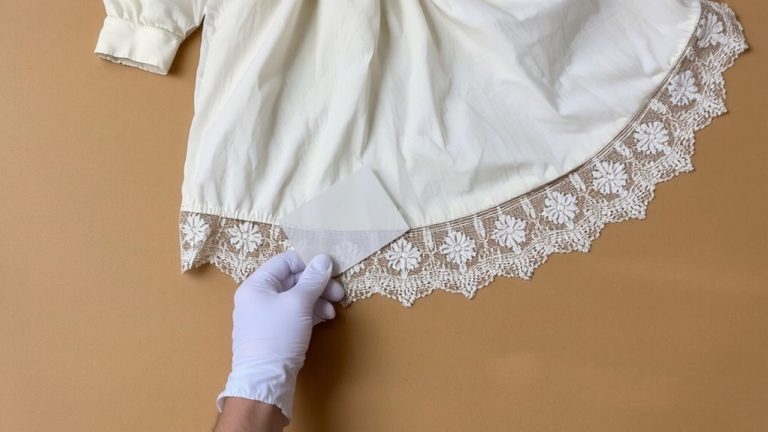
Think of acid-free tissue as your ethnic textile’s best defense against wear, tear, and time. You’ll need it to support fragile areas like frayed edges, open weaves, or fragile embroidery that can’t handle stress. Place acid-free tissue paper under and over weakened areas, especially where thinning fabric or detached beads threaten structural integrity. For folded storage, insert tissue in every fold-this reduces fiber strain and prevents permanent crease damage in culturally significant textiles. Mold tissue behind 3D features like heavy beading to maintain shape and give physical support. Testers found padded areas stayed intact over five years when stored flat. Replace acid-free tissue every 5–10 years, or if discolored, as part of routine maintenance. Clean, fresh tissue guarantees long-term protection. You’re not just storing fabric-you’re preserving heritage with every layer of acid-free tissue paper.
Involve Communities Before Any Preservation Step
How do you guarantee a textile’s story stays true through preservation? You start with community consultation. Before Preserving Textiles, especially items like ceremonial Navajo blankets or Yup’ik gut-skin parkas, you need tribal approval and free prior and informed consent. The American Institute for Conservation supports this, offering a free referral service to connect you with a textile conservator trained in culturally sensitive practices. In New Zealand, the Te Aue Weaving Collective guarantees cultural authenticity by involving elders and weavers in every decision. A 2020 Smithsonian report found 78% of Indigenous textiles lacked this input, leading to misrepresentation. Whether it’s a Bhutanese kira or a Maori taniko, real preservation means honoring origins. You don’t just clean or store-you listen, include, and respect.
On a final note
You should store ethnic textiles flat or rolled, never hung, to prevent fiber stress, using acid-free tissue to support weak areas. Always handle with clean hands, ideally cotton gloves, and keep them in stable, low-light conditions, below 65% humidity. Archival boxes made from pH-neutral materials protect better than plastic. Involve cultural communities early-they know the protocols. Dry cleaning? Avoid it; harsh chemicals damage natural dyes. For stains, don’t spot-treat yourself; consult a conservator.