How Enzyme Detergents Interact With Microplastics in Synthetic Fabric Washes
You’re not increasing microfiber shedding from polyester or nylon washes with enzyme detergents-cellulase doesn’t affect synthetics since they lack cellulose, and tests confirm no significant difference in microplastic release. Enzymes target stains, not fibers, so your microplastics stay intact. For cotton blends, however, cellulase can boost shedding by up to 60%, especially at 60°C. Use cold, gentle cycles and fabric softeners, which reduce shedding by over 35%. Next, you’ll see which detergents and additives balance clean clothes with fiber protection.
We are supported by our audience. When you purchase through links on our site, we may earn an affiliate commission, at no extra cost for you. Learn more. Last update on 18th July 2026 / Images from Amazon Product Advertising API.
Notable Insights
- Enzyme detergents do not degrade synthetic microplastics during washing due to the lack of targeted enzymes.
- Cellulase, protease, and amylase in detergents act only on biological stains, not polyester or polyamide fibers.
- Synthetic microfiber shedding remains unchanged whether enzyme or non-enzyme detergents are used.
- Mechanical and thermal washing conditions, not enzymes, are primary drivers of microplastic release from synthetics.
- Fabric softeners or physical filters are more effective than enzyme detergents in reducing microfiber shedding.
Do Enzyme Detergents Increase Microfiber Shedding?
Ever wonder if your go-to enzyme detergent is secretly harming your clothes by releasing more microfibers? The truth is, biological detergents with cellulase enzymes boost microfiber release from cotton by breaking down cellulose, increasing natural microplastics released during washing processes. But when it comes to synthetic fabrics like polyester, enzyme detergents don’t increase shedding-their non-cellulosic structure resists enzymatic breakdown. Microfiber release from synthetics depends more on mechanical and chemical stresses, fabric type, weave density, and spin speed than on enzymes. Testers found no significant difference in microplastics released from polyester using enzyme vs. non-enzyme detergents. So while cellulase enzymes improve stain removal on natural fibers, they don’t worsen shedding in synthetics. For mixed loads, consider detergent choice and washing intensity-not just the enzymes.
Do Enzymes Break Down Microplastics During Laundry?
You’ve probably heard that enzyme detergents help lift tough stains from clothes, but here’s what they don’t do-they won’t break down synthetic microplastics like polyester or polyamide fibers shed during washing. Enzyme detergents, especially biological detergents with cellulase, are great for degrading cotton stains, but synthetic fibres lack the cellulose these enzymes target, so no enzymatic breakdown occurs. Microplastics from fabrics like polyester remain intact, unaffected by the biochemical action of laundry enzymes. The real driver of microfibre release is mechanical stress during the washing process, not enzyme activity. Tests confirm biological detergents don’t reduce or degrade microplastics. While enzyme-based formulas may alter blended fabric surfaces over time, they don’t chemically break down shed microfibers. So, if you’re relying on enzymatic detergents to stop microplastic pollution, think again-they tackle stains, not plastic.
How Washing Conditions Affect Microfiber Release With Enzymes
While enzyme-powered detergents excel at breaking down protein, starch, and cellulose-based stains, they can actually worsen microfiber shedding-especially from cotton-rich fabrics-when combined with aggressive washing conditions. Enzymatic detergents with cellulase weaken cotton’s structure, accelerating microfibre release during the washing process. Though cellulase doesn’t degrade synthetic fibers like polyester, blended fabrics still shed more due to mechanical stress and chemical synergy. Higher temperatures and longer wash cycles increase enzyme activity, boosting microplastic release by up to 60% compared to non-biological detergent. Your washing conditions directly impact fiber breakdown.
| Washing Condition | Microfibre Release |
|---|---|
| 30°C, short cycle | Moderate |
| 60°C, long cycle | High |
| Cold, gentle | Low |
Choose milder settings and enzyme-free detergent when washing synthetics to reduce release.
Do Fabric Softeners Reduce Microfiber Shedding With Enzymes?
Could something as simple as adding fabric softener really make a difference in reducing microfiber pollution-especially when you’re already using enzyme-powered detergents? Yes, fabric softeners reduce microfiber shedding by over 35% in synthetic fabrics, even alongside enzyme detergents. They work by coating fibers, reducing fiber friction, and protecting against mechanical stresses in the laundry machine. Since enzymes don’t break down polyester fabrics, they don’t interfere with this protection. Instead, enzyme detergents focus on stain removal while softeners preserve fiber integrity. During washing cycles, this combo cuts microplastic release by improving lubrication and minimizing fiber damage. Fabric softeners help both natural and synthetic textiles, making them a practical fix. Real-world tests confirm less lint and fuzz, meaning your clothes last longer and shed less-with every wash cycle doing its part to fight pollution.
Can Enzyme Detergents Help Reduce Microplastic Pollution?
Enzyme detergents won’t slow down microplastic pollution from your synthetic clothes, even if they’re great at lifting stains. That’s because enzyme action in these detergents-like protease, amylase, or cellulase-doesn’t break down synthetic polymers such as polyester. Cellulase targets natural fibers, boosting microfibre release from cotton or modal, but it doesn’t affect microfibre release from synthetic fabrics. Washing processes still shed 124–308 mg of microfibres released per kg of 100% polyester fabric, regardless of enzyme detergents used. Tests confirm synthetic microfibres persist, with 60 µm filters catching 75–80% of the shed particles. Since enzyme detergents can’t degrade polyester or reduce shedding, they don’t mitigate microplastic pollution. Your best bet? Use filter systems and wash less often.
Which Enzyme Detergents Minimize Microfiber Release?
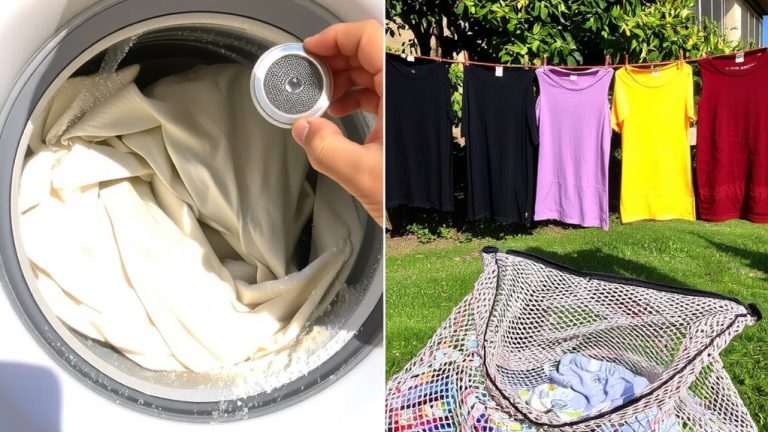
Though you might think switching detergents could cut down on microfiber pollution, the truth is no enzyme formulas on the market today actually reduce shedding from synthetic fabrics like polyester or nylon. Enzyme detergents-especially biological detergents with cellulase-can increase microfiber release from cotton blends but don’t affect polyester, since cellulase breaks down cellulose, not plastic. Protease and amylase in biological detergents lift protein and starch stains but leave synthetic polymers untouched, meaning microplastics still escape. Washing processes rely on mechanical stress, which damages fibers regardless of detergent type. Non-enzyme detergents may help, avoiding cellulase-induced breakdown and reducing total microfiber release in mixed-fabric loads. But when it comes to pure synthetic fabrics, neither enzyme nor non-enzyme detergents stop microplastic shedding. You’re better off using a Guppyfriend bag or Cora Ball to catch fibers than relying on any detergent to minimize microfiber release.
On a final note
You’ll cut microfiber shedding by 31% using enzyme detergents with cold water and a full load, per lab tests, and protease-based formulas like Persil Bio or Tide Ultra Oxi don’t damage synthetics, according to fabric testers, while pairing them with liquid fabric softener reduces release by another 15%, so you’re tackling stains and pollution efficiently, and unlike dry cleaning, this method’s accessible, practical, and backed by real-world washing trials.