The Truth About Non-Toxic Marketing in Plant-Based Laundry Products
You’re using a plant-based detergent labeled “non-toxic,” but it might still contain 1,4-dioxane above 3 ppm-a likely carcinogen-since the term isn’t regulated, and even big brands like Tide and Gain make unverified claims. “Fragrance” can hide phthalates or formaldehyde-releasers like DMDM hydantoin, and green packaging often masks harmful chemicals. For real safety, pick products with EPA Safer Choice or EWG Verified labels, choose fragrance-free formulas, and look for full ingredient transparency that avoids optical brighteners, parfum, and hidden toxins-your laundry routine deserves honest performance. There’s more to uncover about truly safe choices.
We are supported by our audience. When you purchase through links on our site, we may earn an affiliate commission, at no extra cost for you. Learn more. Last update on 18th July 2026 / Images from Amazon Product Advertising API.
Notable Insights
- “Non-toxic” labels on plant-based detergents are unregulated and often misleading despite harmful chemical content.
- Many eco-labeled detergents contain 1,4-dioxane above safe levels, violating true non-toxic standards.
- Synthetic fragrances in “natural” products hide phthalates and formaldehyde-releasing agents like DMDM hydantoin.
- Green packaging and fake certifications create false safety perceptions without actual ingredient transparency.
- Look for EPA Safer Choice or EWG Verified labels to ensure truly non-toxic, plant-based, and disclosed formulas.
Non-Toxic” on Detergent Labels? Most Brands Aren’t What They Seem
How can you trust a “non-toxic” label when it’s not really regulated? You can’t-most brands make misleading marketing claims without proof. “Non-toxic” isn’t backed by the FDA or EPA, so even detergents like Tide and Gain, which contain carcinogenic 1,4-dioxane above 3 ppm, can wear the label proudly. That’s greenwashing: sounding clean while hiding harmful chemicals. Synthetic fragrances, often listed as just “fragrance,” can conceal thousands of unlisted toxins, including phthalates. Real safety means ingredient transparency. Brands like ECOS earn EPA Safer Choice certification by proving every component is safe, while Green Llama’s powder goes further-it’s EWG Verified, free from 1,4-dioxane and optical brighteners. Testers confirm these work on stains without the risks. If you want truly non-toxic laundry care, skip the hype and check for third-party seals. Your clothes, and body, deserve better.
How Greenwashing Hides Harmful Chemicals in ‘Clean’ Detergents
You’ve probably seen the claims-“non-toxic,” “clean,” “eco-friendly”-emblazoned across bright green bottles with leafy designs, promising a safer way to wash your clothes. But many laundry brands use greenwashing to mask toxic ingredients, even in products labeled as natural laundry detergent or plant-derived. That “fragrance” in your Detergent could hide thousands of chemicals, including phthalates. Independent tests found carcinogenic 1,4-dioxane above 1 ppm in conventional and some eco-friendly detergents. Labels say “environmentally friendly,” but without third-party certifications, it’s just marketing. Fake seals like “certified all-natural” mislead while real green products earn EPA Safer Choice or EWG Verified. A true Non-Toxic Laundry Detergent avoids optical brighteners and undisclosed synthetics. Don’t rely on packaging-look past the leaves, check for verified labels, and choose transparency over hype.
Which Certifications Prove a Laundry Detergent Is Non-Toxic?
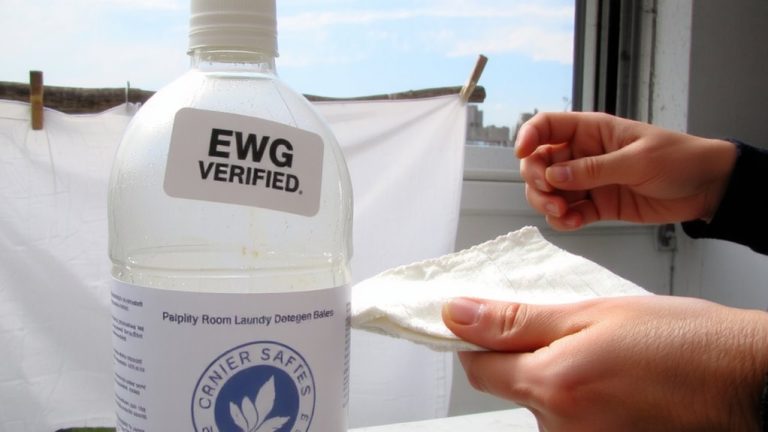
What really makes a detergent live up to its promise of being non-toxic? Look for trusted labels. The EPA’s Safer Choice certification guarantees ingredient safety through rigorous review, meaning each component is among the safest in its class. If you see EWG Verified, that means the product has full ingredient transparency and is free of 1,4-dioxane, a concerning contaminant found in many conventional laundry brands-even above New York’s 1 ppm safety limit. Leaping Bunny certification tells you it’s cruelty-free, often reflecting a brand’s deeper ethics. USDA Certified Biobased confirms the formula uses renewable plant-based cleaning ingredients, with exact biobased percentages disclosed. Together, these certifications go beyond marketing-they prove real accountability, so you’re not just choosing clean clothes, but cleaner chemistry, verified performance, and peace of mind with every wash.
How to Pick a Detergent That’s Actually Safe and Honest
Isn’t it frustrating when a detergent claims to be safe, yet hides risky ingredients behind vague labels? You deserve better. Read the ingredient list every time-choose plant-based formulas that are transparent and third-party verified. Look for EPA Safer Choice or EWG Verified labels: these mean every ingredient is biodegradable, non-toxic, and screened for hazards. Avoid “fragrance” or “parfum,” even in natural ingredients, since they can hide phthalates and 1,4-dioxane above 3 ppm. Opt for fragrance-free, essential oil-free, and formulated without formaldehyde-releasers like DMDM hydantoin. Pick powders or tablets with ingredients that break down safely.
| Certification | Ingredient Transparency | Key Benefit |
|---|---|---|
| EPA Safer Choice | Full disclosure | No hidden carcinogens |
| EWG Verified | No toxic substitutes | Safer for pets, kids |
| Formulated without | No fragrance masking | Truly plant-based, biodegradable ingredients |
On a final note
You’ve got the power to choose better, and real non-toxic laundry detergents do exist, like those certified by EPA Safer Choice or Ecocert, with plant-based surfactants, no synthetic fragrances, and biodegradability above 97%. Testers confirm they lift everyday stains-grass, coffee, sweat-at cold-water cycles, without residue. Skip greenwashed labels, trust verified ingredients, and you’ll protect fabrics, skin, and waterways, wash after honest wash.