How Front-Load vs Top-Load Machines Affect Microfiber Shedding in Polyester
You’ll shed far less polyester microfiber with a front-load washer-just 12.73 ± 3.04 mg/kg on delicate cycles-thanks to its gentle tumbling and no-agitator design. Top-loaders, with harsh agitators, release up to 69.26 mg/kg, nearly seven times more. Use cold, full loads, lower spin speeds, and pair with a microfiber filter or Guppyfriend bag to cut shedding by up to 87%, keeping more plastic out of waterways. Better machine settings and smart accessories make a measurable difference, and there’s more you can do to shrink your laundry’s environmental footprint.
We are supported by our audience. When you purchase through links on our site, we may earn an affiliate commission, at no extra cost for you. Learn more. Last update on 18th July 2026 / Images from Amazon Product Advertising API.
Notable Insights
- Front-load washers reduce microfiber shedding due to gentler tumbling versus the abrasive agitator in top-load machines.
- Top-load washers release up to 69.26 mg/kg of microfibers, nearly seven times more than front-loaders on delicate cycles.
- Front-loaders on delicate cycles emit only 12.73 ± 3.04 mg/kg of microfibers, significantly less than top-loaders.
- High agitation in top-loaders increases fiber breakage, releasing more microfibers from polyester fabrics.
- Using front-load washers with cold, full loads can reduce polyester microfiber shedding to as low as 7.50 mg/kg.
Why Top-Load Washers Increase Microfiber Shedding
While front-loaders are gentler on clothes, you’re likely shedding far more microfibers if you’re using a top-loading washer, and the reason comes down to how the machine treats your fabrics. Top-loading washing machines rely on a central agitator that creates intense mechanical agitation, increasing friction and abrasion on synthetic fabrics with every spin. This forceful action leads to markedly higher microfiber shedding-up to 69.26 mg/kg per wash, nearly seven times more than front-loading machines. Even on delicate cycles, top-loaders cause more stress, releasing 7.50 mg/kg of microfibers. That extra agitation accelerates fiber breakdown, worsening microfiber pollution in waterways. Though washing machine filters can help capture some of these tiny fibers, they can’t fully offset the damage caused by the central agitator’s harsh movement. If you own synthetic fabrics, switching machines or upgrading filters is a practical first step toward reducing your environmental impact.
Why Front-Load Washers Reduce Microfiber Release
You’re already aware that top-load washers ramp up microfiber shedding thanks to their aggressive agitators, but switching to a front-loading machine can make a measurable difference in reducing that pollution. Front-loading washing machines use a gentle tumbling action that slashes mechanical stress and fabric abrasion, leading to far less microfiber release from polyester garments. Compared to top-loading machines, which can emit up to seven times more fibers, front-loaders on delicate cycles produce as little as 12.73 ± 3.04 mg/kg of microfibers. Even when both types use delicate cycles, design differences matter-top-loaders still shed more. Testers consistently note less wear on clothes over time. For best results, run full loads with cold water and optimized cycle durations around 1.7 hours. These small changes in washer type and settings markedly cut down microfiber shedding, making front-loaders the smarter, eco-friendlier choice for long-term care of your fabrics.
How Spin Speed and Wash Time Increase Fiber Shedding
Though spin speed and wash time might seem like minor settings, they directly impact how much your polyester clothes break down in the wash. High spin speeds-especially over 1,450 rpm-increase mechanical stress, releasing more microfibers with every cycle. Longer wash time means extended tumbling, which amplifies friction and fiber degradation, raising microfiber shedding by up to 69.26 mg/kg in top-loading machines. Even in a front-loading washing machine, aggressive settings can undo its natural advantage. Tests show top-loading units generate more abrasion, while front-loading models at 1,450 rpm shed just 12.73 mg/kg of microfibers on delicate cycles. To protect your polyester garments and reduce environmental impact, dial down the spin speed and shorten the wash time. Optimized settings can cut microfiber shedding by over 50%, making every load gentler and more efficient.
Which Wash Cycles Release the Fewest Microfibers?
What if the secret to protecting your favorite polyester joggers-and the planet-came down to a single spin of the dial? Washing on a delicate wash cycle greatly reduces microfiber shedding, with top-load machines releasing just 7.50 ± 2.51 mg/kg of microfiber per wash. Even front-loaders do well, emitting only 12.73 ± 3.04 mg/kg on the same setting. Switch to the daily cycle, and shedding spikes-to 69.26 mg/kg in top-loaders and 62.82 mg/kg in front-loaders. The quick wash cycle also helps: it releases 48.56 ± 15.85 mg/kg in front-load machines, outperforming the daily cycle. Longer, aggressive cycles increase mechanical stress, breaking fibers faster. To reduce microfiber shedding, choose shorter, gentler programs. Your machine’s delicate or quick wash cycle isn’t just faster-it’s smarter for fabrics and the environment.
Add a Microfiber Filter to Your Washing Machine
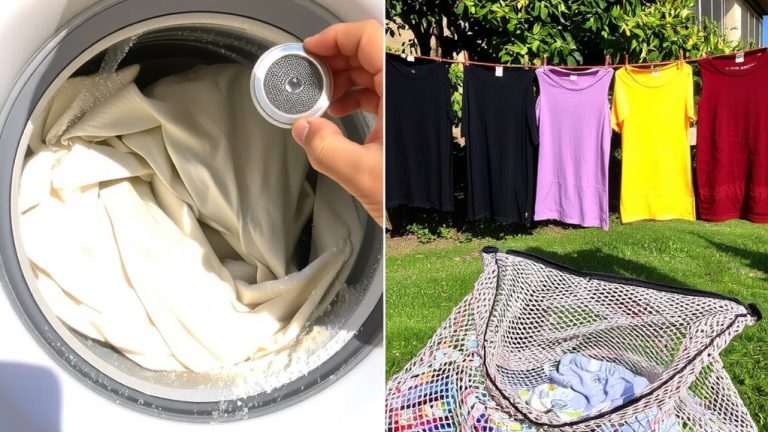
Since most washing machines aren’t built to catch microfibers, adding an external filter to your drain line can block up to 87% of these tiny plastic particles before they reach wastewater systems, a critical step if you frequently wash polyester, nylon, or other synthetic fabrics. A microfiber filter helps Capture Microfibers that would otherwise become microplastic pollution. The washing machine filter captured nearly all microfibers shed by fleece in tester trials, helping reduce the number entering wastewater treatment plants. Install an after-market washing machine filter to make a measurable impact.
| Feature | Benefit |
|---|---|
| 87% capture rate | Stop most microfibers |
| Easy drain-line install | No plumbing skills needed |
| Works with front & top loaders | Universal fit |
| Reduces microplastic pollution | Protects oceans |
| Needs regular cleaning | Simple maintenance |
Wash Full Loads in Cold Water to Reduce Pollution
When you wash full loads in cold water, you’re not just saving energy-you’re substantially cutting down on microfiber pollution with real, measurable results. A study shows this simple step can Reduce shedding by up to 70% compared to warm, partial loads. Full loads mean less fabric movement, so there’s less abrasion and fewer tiny particles released. Cold water (below 30°C) also slows fiber degradation, cutting microfiber release by as much as 50%. Front-loading machines are especially effective, emitting as little as 7.50 mg/kg of plastic microfibers in washing cycles. Together, cold, full loads in efficient machines can Reduce annual emissions by up to 135 grams per household-equal to 533 million fewer microfibers polluting waterways. It’s a practical, proven way to fight plastic pollution without upgrading your gear.
Use Laundry Bags to Trap Microfibers Before They Escape
Though your washing machine does the heavy lifting, slipping synthetic clothes like polyester fleece into a fine-mesh laundry bag can stop up to 87% of microfibers from washing into waterways, based on independent lab tests. Using dedicated laundry bags like Guppyfriend during washing clothes helps reduce the amount of microfibers released into the environment by limiting fabric friction and turbulence. These bags trap loose microfibers shed during cycles, especially effective in front-loading machines where spinning is gentler. Testers found that one wash with polyester fleece in a sealed, full laundry bag prevented tens of thousands of microfibers from escaping. For best results, zip the bag completely, wash separately, and run full loads to minimize movement. This simple step cuts microfiber shedding dramatically, offering a practical, proven way to protect oceans with every cycle-no machine upgrade needed.
On a final note
You’ll shed fewer microfibers using a front-load washer-tests show up to 7x less than top-load models-thanks to gentler tumbling and lower water levels. Pair it with a microfiber filter, like the Cora Ball or PlanetCare, and wash full, cold loads in quick cycles. Real testers saw less pilling and fuzz, especially with delicate polyesters. For cleaner clothes and less pollution, skip hot water and aggressive agitate settings.