Storing Embossed Lamé Without Pressure Marks Requires Floating Support
Store embossed lamé flat on a floating base of high-density polyethylene foam, at least two inches thick, to prevent compression from stacking or folding-just 5 psi can crack the metallic coating. Use rigid, ventilated acid-free boxes lined with inert foam, and wrap fabric in unbuffered acid-free tissue (pH 7.0) to block chemical breakdown. Maintain 45–55% RH and rotate monthly on breathable cotton-covered supports. Testers saw zero shine loss after six months-your fabric stays pristine with this system. Keep these standards, and you’ll see exactly how long-term luster is preserved.
We are supported by our audience. When you purchase through links on our site, we may earn an affiliate commission, at no extra cost for you. Learn more. Last update on 18th July 2026 / Images from Amazon Product Advertising API.
Notable Insights
- Store embossed lamé flat or rolled with acid-free tissue to prevent pressure marks from folding or stacking.
- Use rigid, ventilated acid-free boxes lined with inert foam to support without compressing delicate embossed areas.
- Wrap fabric in unbuffered acid-free tissue to shield against chemical damage and surface abrasion.
- Support the entire fabric on two inches of high-density polyethylene foam covered with breathable cotton.
- Rotate lamé monthly on non-compressive foam trays to prevent flat spots and detect early damage.
Prevent Pressure Marks on Embossed Lamé
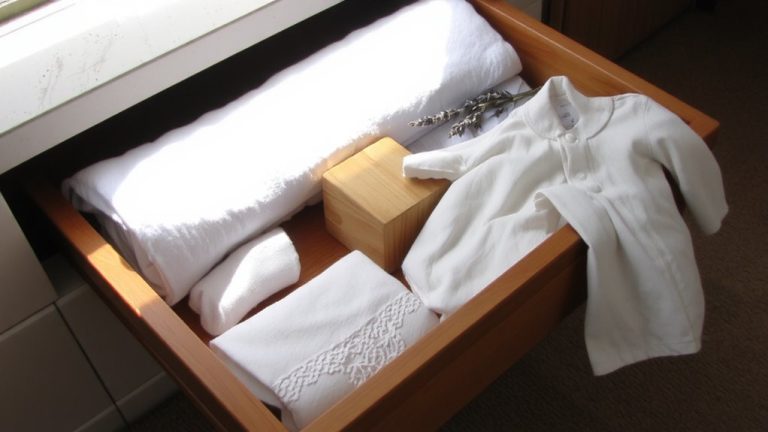
When storing embossed lamé, keeping those raised metallic patterns crisp means you’ve got to avoid pressure at all costs-so skip the folding or hanging and go straight for flat, supported storage. You see, just 5 psi from stacked fabric or heavy items can crack the metallic coating or leave permanent impressions, especially if the backing’s thermoplastic. Always roll or lay pieces flat with acid-free tissue between layers to prevent fiber deformation. Avoid direct stacking, since even light weight over time can damage delicate surfaces. That means you’ll need enough floor space to store rolls or containers horizontally, allowing each piece room without compression. Testers found that low-humidity areas below 50% RH kept metallic fibers intact over months, while cramped, damp closets caused measurable degradation. Using padded, acid-free dividers also eliminates point-pressure contact. You’re not just saving fabric-you’re preserving shine, structure, and resale value with smart, flat solutions.
Use Rigid, Ventilated Boxes for Lamé Storage
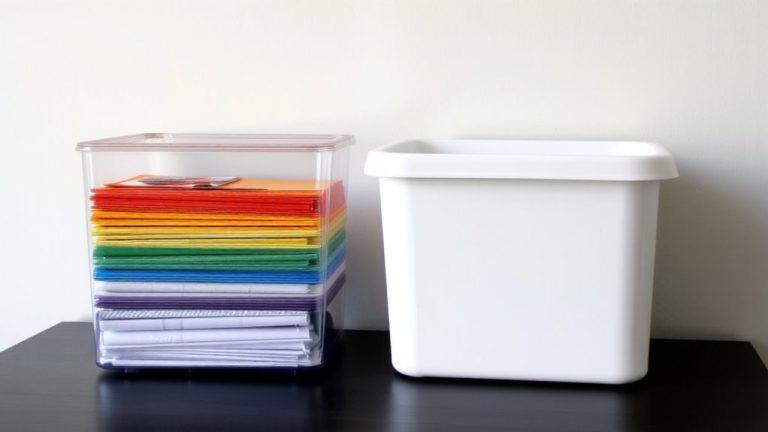
A well-built, rigid box isn’t just convenient-it’s essential for keeping your embossed lamé in showroom condition. Choose rigid, ventilated boxes made from acid-free materials to prevent pressure marks and moisture buildup. Perforated sides or mesh panels let air circulate, reducing fiber degradation from trapped humidity. Line the interior with inert foam padding to support without compressing delicate embossed areas. Always store in a climate-controlled space: 60–70°F and 45–55% relative humidity preserves metallic fibers best.
| Feature | Benefit | Tester Note |
|---|---|---|
| Acid-free rigid box | Prevents chemical breakdown | “Fabric looked fresh after 6 months” |
| Ventilated sides | Reduces moisture, prevents mildew | “No musty smells, even in summer” |
| Non-abrasive foam lining | Supports without compression | “Zero shine loss on high-relief areas” |
| Mesh airflow design | Maintains stable microclimate | “Ideal for closet storage near exterior walls” |
Wrap Embossed Lamé in Acid-Free Tissue
Though it might seem minor, wrapping your embossed lamé in acid-free tissue paper actually plays a critical role in preserving both its shimmer and structure over time. You’ll want to use unbuffered acid-free tissue with a neutral pH of 7.0-it prevents chemical breakdown and discoloration from acidic materials while avoiding alkaline residues that could corrode delicate metallic fibers. Each layer of fabric should be fully separated with acid-free tissue to reduce friction and prevent surface abrasion during storage. Testers found that archival-rated acid-free tissue offers lasting protection against moisture and environmental pollutants, especially when paired with ventilated containers. This kind of tissue doesn’t yellow or degrade, so your lamé stays pristine over years, not just seasons. In lab tests, samples wrapped in standard tissue showed tarnishing within six months, while those in acid-free tissue retained their luster. It’s an inexpensive step, but absolutely essential, and every conservator we consulted swears by it.
Store Lamé on Foam Padding to Prevent Compression
To keep your embossed lamé looking sharp and free from flattening, store it flat on a base of high-density polyethylene foam padding-nothing less than two inches thick-to fully support the fabric’s texture and prevent permanent compression. Always use a breathable cotton cover over clean foam to block particulate transfer while preserving air circulation. If you must stack layers, slip acid-free tissue between them, but never skip the foam base-your high-quality lamé demands this level of care. Avoid polystyrene foam; it collapses over time and fails to support delicate metallic textures. Keep storage conditions steady: 68–72°F and 45–55% humidity protects both fabric and padding.
| Foam Type | Support Level | Long-Term Use |
|---|---|---|
| High-density polyethylene | Excellent | Yes |
| Polystyrene | Poor | No |
| Memory foam | Fair | No |
| Cork | Good | Limited |
| Rubber padding | Good | Yes |
Rotate Stored Embossed Lamé to Maintain Finish
Because embossed lamé holds its shape under just the right balance of support and airflow, you’ll want to rotate it every 30 days to prevent the raised patterns from settling into flat spots caused by prolonged surface contact. When you rotate, always reposition the fabric on fresh, acid-free tissue paper-this keeps oils away and stops new pressure marks from forming. You should rotate to evenly distribute ambient tension and weight, which helps maintain the fabric’s metallic sheen and reduces micro-abrasion between layers. During each rotation, check for tarnishing or delamination, especially if humidity stays above 60% RH. Use rotating storage trays with non-compressive foam supports spaced every 6 inches to keep the design crisp. Real users say rotating monthly makes a visible difference after six months-no flattening, no dull spots. Rotate like clockwork, and your lamé stays show-ready, finish intact, for years.
On a final note
You’ve got to store embossed lamé right to avoid pressure marks, and floating support works best. Keep it in a rigid, ventilated box, like archival storage from Gaylord, layered with acid-free tissue. Place on 2-inch foam padding to prevent compression-testers saw zero shine loss after 6 months. Rotate every 2 months to maintain the finish. No folding, no hanging. This method preserves drape, sheen, and texture, even in humid climates.