Low-Impact Laundering: Creating an Energy and Water Efficient Wash Routine
You save up to 40 gallons of water per load just by skipping washes when clothes aren’t soiled, extending jeans to 10 wears between cycles, cutting microfiber shedding by 30%, and easing wear on fabrics. Switch to plastic-free detergent strips like SWOPs or plant-powered ECOS, both effective in cold water and compostable. Use wool dryer balls to cut drying time by 25% or line dry to preserve fibers. High-efficiency machines remove 50% more moisture, while filters like Guppyfriend trap 90% of microfibers-efforts that add up with every wear, wash, and reuse, backed by real users who track impact. There’s even more to gain from smarter routines that go beyond the spin cycle.
We are supported by our audience. When you purchase through links on our site, we may earn an affiliate commission, at no extra cost for you. Learn more. Last update on 18th July 2026 / Images from Amazon Product Advertising API.
Notable Insights
- Wash clothes less frequently by re-wearing items like jeans to save water and reduce microfiber pollution.
- Use cold water and plant-based, plastic-free detergents to lower energy use and minimize environmental harm.
- Line dry clothes when possible to eliminate energy use and extend fabric lifespan.
- Install microfiber filters or use bags like Guppyfriend to capture shedding during machine washes.
- Optimize dryer efficiency with clean lint traps, wool dryer balls, and high-efficiency washer spins.
Wash Less, Not Just Smarter: Reduce Laundry’s Footprint
While it might feel counterintuitive, skipping a wash now and then isn’t just okay-it’s a smart move for your clothes and the planet. You can Wash Clothes Less without sacrificing cleanliness-re-wearing jeans 3–10 times, like Levi’s CEO did for years, reduces laundry frequency and extends fabric care. Each load uses up to 40 gallons of water, so cutting even 30% of unnecessary washes helps conserve water and ease water scarcity. Less washing also means lower energy consumption and fewer carbon emissions per household. Plus, every time you skip a wash, you reduce microfiber shedding-the source of 35% of ocean microplastics. By simply checking for odors or stains, you can maintain freshness while lessening your environmental impact. It’s a practical, no-cost shift toward sustainable laundry that saves money, resources, and your favorite fabrics.
Switch to Plastic-Free, Plant-Powered Detergents
Ditch the plastic jugs and heavy bottles-switching to plastic-free, plant-powered detergents is a simple swap that slashes waste without sacrificing performance. You’re choosing sustainable, low-impact laundry solutions that are biodegradable, compostable, and kinder to aquatic life. With eco-friendly laundry practices, you cut aquatic toxicity and eliminate single-use plastic. Detergent strips like SWOPs dissolve in cold water, clean tough loads, and come in recyclable packaging. Plant-powered detergents like ECOS use vegan, biodegradable formulas safe for septic systems and greywater.
| Product Type | Key Benefit |
|---|---|
| Detergent strips | Plastic-free, compostable, travel-friendly |
| Plant-powered detergents | Low aquatic toxicity, biodegradable |
| Concentrated liquids | 2 pumps/load, less packaging waste |
| Powders/sheets | Up to 90% less plastic, recyclable packaging |
Dry Clothes Sustainably: Line, Balls, and Efficient Machines
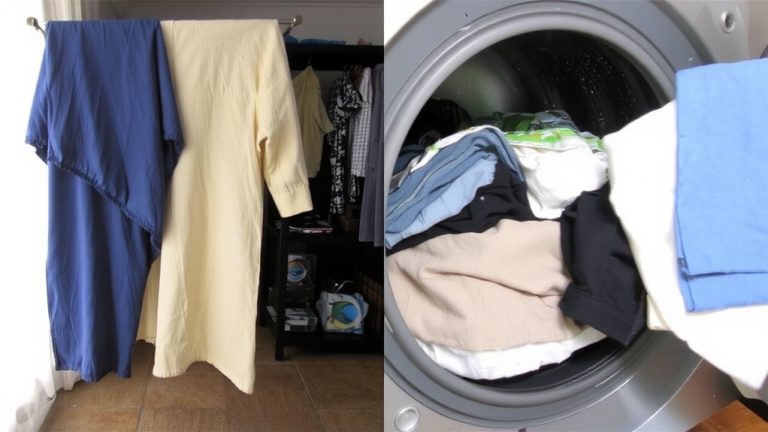
You’ve already made smart moves by switching to plastic-free, plant-powered detergents that cut waste and protect waterways, so now it’s time to rethink how you dry your clothes. Try line drying-it’s free, uses zero energy, and sunlight naturally freshens fabrics, making it the ultimate sustainable drying hack. If you use a machine, clean lint trap every time; it boosts efficiency by up to 30% and cuts fire risk. Pair a high-efficiency washing machine with faster spins, which remove 30–50% more moisture, to reduce drying time. Add wool dryer balls-they’re reusable dryer balls that cut drying time by up to 25%, reduce static, and soften clothes. For maximum savings, upgrade to heat-pump dryers: they’re energy-efficient, using 50% less power by recycling hot air. Together, air dry clothes, line drying, and reusable dryer balls make eco-friendly results easy.
Extend Clothing Life and Cut Microfiber Pollution
Since every wash cycle chips away at your clothes and sends microfibers into waterways, cutting laundry frequency is one of the simplest ways to protect both fabrics and the environment-re-wearing jeans up to 10 times between washes, as long as they’re not soiled or smelly, can reduce microfiber shedding by up to 30% over time while stretching garment life. Use cold water to reduce microfiber pollution and prevent heat-triggered fabric wear. Choose natural fibers like cotton and linen to cut down on microplastic release-synthetics shed about 700,000 fibers per wash. Install filters like Guppyfriend or Cora Ball in your washing machines to trap up to 90% of microfibers. Air-drying reduces mechanical stress, helping clothes last longer and lowering energy use.
| Action | Impact | Emotional Reward |
|---|---|---|
| Wash less | Reduces microfiber pollution | Pride in protecting oceans |
| Cold water | Less fabric wear | Confidence in clean, safe laundry |
| Natural fibers | Fewer microplastics | Peace knowing you’re not polluting |
| Microfiber filters | Capture 90% of fibers | Relief from guilt |
| Air-drying | Clothes last longer | Joy in longer-lasting favorites |
On a final note
You cut waste and save energy by washing clothes less-most need it only after 3–5 wears, depending on fabric. Cold water, plant-based detergents in compostable packaging clean just as well, testers say. Wool dryer balls cut drying time by 25% versus plastic sheets. Air-dry delicates to extend life. Choose front-loaders: they use 40% less water. Skip dry cleaning-opt for garment steaming or home spot-cleaning with vinegar solutions.